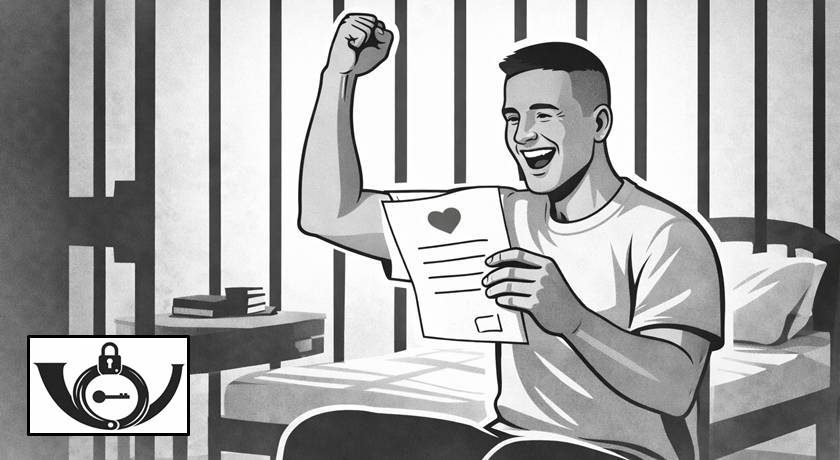
Writing a letter can be one of the simplest, most meaningful ways to support someone who is living behind bars in the United States. Whether the person you’re writing to is serving a sentence, awaiting trial, or being held in a secure facility, receiving mail often provides connection, hope, and a reminder that they’re not forgotten.
On our service, you can send letters to people who are incarcerated across the USA in many different settings. That includes writing to an inmate, a prisoner, a person in custody, a person in detention, or other commonly used terms that vary by state, agency, and facility type.
Who can you write to in the USA?
In the United States, the terms used depend on whether someone is held in a jail, a prison, a detention center, or another custodial setting—and whether the system is county, state, federal, or immigration-related. Through our service, you can send letters to people in a wide range of custody situations, including:
- Inmates (very common in U.S. correctional facilities)
- Prisoners (widely understood and used)
- People in custody / persons in custody (legal or official language)
- People who are incarcerated / incarcerated people (broad, commonly used phrasing)
- People in prison / people imprisoned
- People in jail (often local/county custody, shorter-term or pretrial)
- Jail inmates / county jail detainees
- Pretrial detainees (awaiting trial)
- People awaiting sentencing
- People serving a sentence / sentenced individuals
- People held in custody / people held in detention
- Individuals confined in a correctional facility
- Residents of correctional institutions
- People in a correctional institution / correctional facility
- People in a penal institution / penal facility (more formal)
- People in secure custody / secure detention
- People deprived of liberty / persons deprived of liberty (policy and human-rights language)
- Detainees / detained individuals (common in detention contexts)
- People in a detention center (varies by system and agency)
- People in immigration detention (civil detention)
- People in federal custody / people in state custody (administrative phrasing)
No matter which term is used, the core idea is the same: you can write to someone who is held by authorities in a closed institution—whether that’s a prison, a jail, a pretrial facility, a detention center, or another type of secure custody setting in the USA.
Why letters matter
For many incarcerated people—whether they’re prisoners, jail detainees, or people in custody—mail can be one of the few consistent links to the outside world. A letter can provide emotional support, encouragement, and a sense of dignity. Even short messages can make a real difference.
Letters can help with:
- Connection: feeling less isolated and more human
- Stability: something normal and predictable in a controlled environment
- Motivation: encouragement to keep going, study, work, or heal
- Hope: a reminder that someone cares and is paying attention
Important note about U.S. mail rules and delivery
Mail policies in the United States can vary dramatically by facility, state, and agency. Some places deliver traditional paper mail, while others scan mail and deliver printed copies or provide digital access, depending on local rules.
To help ensure delivery, it’s important to follow:
- the exact addressing format required by the facility
- any rules about paper type, ink color, photos, drawings, and enclosures
- the facility’s policies on what is considered contraband
Common reasons U.S. prison/jail mail gets rejected or delayed
While every facility is different, these are frequent issues:
- Missing or incorrect inmate ID / DOC number / register number
- Name doesn’t match the person’s legal name on file
- No return address
- Prohibited items inside the envelope (cash, stamps in some facilities, extra packaging)
- Decorative materials (glitter, stickers, tape, perfume, lipstick marks)
- Metal or hard items (paper clips, staples, laminated cards)
- Too many photos, or photos that violate local rules
How to address a letter to someone incarcerated in the USA (basic format)
Most U.S. facilities want an address structure like this:
Full legal name
Inmate ID / DOC number / Register Number
Facility name
Housing unit / block / pod (if required)
Street address or P.O. Box
City, State ZIP
Small details matter—especially the ID number. If it’s missing, the facility may not be able to match the letter to the right person.
What you can write about (and what to avoid)
You can write about everyday life, family updates, music, books, sports, memories, goals, encouragement, and anything that helps the person feel connected to normal life.
It’s usually smart to avoid content that triggers security review or rejection, such as:
- instructions for breaking rules or smuggling contraband
- threats, harassment, or incitement to violence
- messages that look “coded” or intentionally disguised
- overly specific operational details about staff, schedules, or security
Also keep in mind: in many U.S. facilities, general mail can be opened and inspected under facility rules (legal mail is handled differently).
Types of U.S. facilities you can write to
Through our service, you can send letters to people held in settings such as:
- County and city jails (often pretrial and short-term custody)
- State prisons (longer-term sentences)
- Federal prisons (people in federal custody)
- Private correctional facilities (where applicable)
- Detention centers (including various secure detention settings)
- Immigration detention facilities (civil detention)
The exact rules can differ across these systems, so it always helps to use the recipient’s official facility address and identification number.
Ready to send a letter?
Choose your recipient, follow the facility’s addressing rules, and write a message that’s respectful, supportive, and human. Whether you call them an inmate, a prisoner, a detainee, or a person in custody—your letter can be a real lifeline.