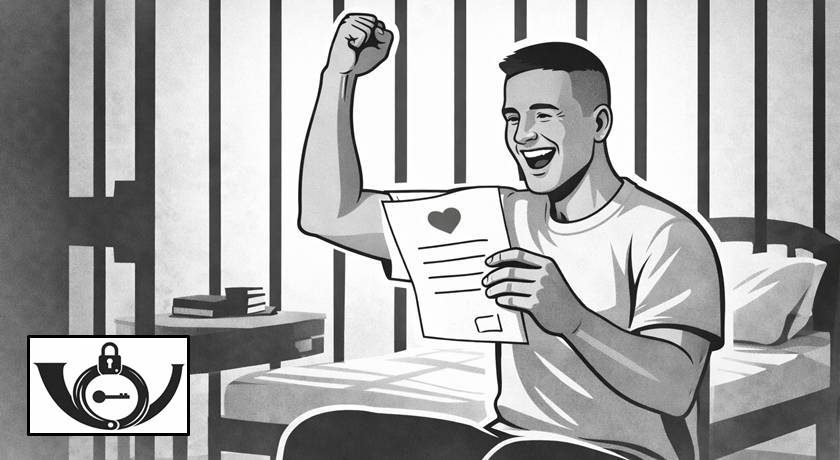
Sending a letter to someone in prison in the UK is one of the most practical ways to stay connected—and for many people inside, it’s also one of the most stabilising. Unlike a quick message, a letter is something a person can keep, re-read, and return to when days feel repetitive or difficult.
If you’re using our service, you can send mail to people held across the UK prison estate, including people in prisons and other custodial settings. The UK system has a few quirks compared with other countries, so it helps to understand the basics before you post anything.
What “prison” means in the UK
In everyday English, people often say “prison,” but the UK has multiple systems and terms depending on where the person is held:
- Prisoners (the most common umbrella term)
- People in custody / people in prison (neutral, widely understood)
- People who are incarcerated (less common in UK usage, but understood)
- People on remand / remand prisoners (awaiting trial or sentencing)
- Sentenced prisoners (serving a custodial sentence)
- People in a correctional facility (more international phrasing; UK more often says “prison”)
The UK is also split into separate legal jurisdictions: England & Wales, Scotland, and Northern Ireland. Mail rules are broadly similar in principle, but the details can vary by prison and jurisdiction.
Who you can write to
You can write to people in different stages and types of custody, including:
- Someone on remand (pre-trial or awaiting sentencing)
- Someone serving a sentence in a public prison
- Someone in a young offender institution (for younger people, depending on jurisdiction and age group)
- Someone held in secure custody where standard letter rules apply
If you’re not sure which prison someone is in, the most important thing is getting the correct full name and the correct establishment—mail systems depend heavily on exact matching.
Why letters matter (especially in the UK context)
UK prisons can be highly structured environments, and contact with the outside world is often limited by schedules, access to phones, and day-to-day restrictions. Letters can fill the gaps in a way other channels can’t.
A good letter can offer:
- Continuity: a steady thread back to normal life
- Practical support: reminders, plans, encouragement, reassurance
- A record of care: something physical that can be kept
Even if you don’t know what to say, a short, regular note (“thinking of you,” small life updates, a memory) can be more helpful than a long message once in a while.
How to format a UK prison address
UK prison addressing is usually straightforward, but it’s unforgiving if details are missing. A typical structure looks like:
Full name of the recipient
Prison number (also called a prisoner number) — if you have it
Name of the prison
Prison address
Postcode
United Kingdom
If you don’t have the prison number, the letter can still be deliverable in many cases, but including it greatly reduces delays and misrouting—especially for common names.
What to include (and what typically causes problems)
UK prisons screen mail for safety and security. That doesn’t mean you have to write stiffly—it just means you should keep things clear and avoid anything that looks like it could create risk inside.
Usually fine:
- Everyday life updates (work, family, pets, weather, sport)
- Encouragement and emotional support
- Books, films, music, hobbies, goals
- Photographs (often allowed, but limits and content rules can apply)
Common pitfalls:
- No return address (many prisons require it)
- Sending items instead of paper (cash, objects, electronics, etc.)
- Anything that looks like instructions for breaking rules
- Content that could be read as threatening, harassing, or inciting violence
- Excessive “coded” messaging that looks deliberately obscured
Rules about enclosures—especially photos, printed materials, and greeting cards—can vary by establishment, so keeping it simple improves reliability.
A few UK-specific tips that improve delivery
- Use the person’s legal name as recorded by the prison.
- Write the prison number clearly if you have it.
- Avoid bulky envelopes; keep to standard paper when possible.
- Don’t use decorations that can be flagged (heavy perfume, stickers, glitter, thick layers of tape).
- If you’re sending photos, send a small number and keep them appropriate and clearly family-friendly.
Where people may be held (at a glance)
When someone says “UK prison,” they might be in:
- A standard local prison (often includes remand and short sentences)
- A training prison (often longer sentences, more structured regimes)
- A high-security prison (stricter controls)
- A young offender institution (depending on age and jurisdiction)
- A facility within Scotland or Northern Ireland with its own administrative system
You don’t need to master the categories—what matters is the exact prison name and address.
If you’re not sure what to write
Start simple. A strong first letter can be short and warm:
- Introduce yourself (or confirm who you are)
- Say why you’re writing and that you’re thinking of them
- Share a few ordinary updates
- Ask one or two gentle questions (books, music, how they’re doing)
- End with something steady: “I’ll write again soon.”
Ready to send a letter to the UK?
Once you have the correct prison details, write a message that’s respectful, human, and consistent. In the UK system, small details—name, prison number, prison address—matter for delivery, but what matters most to the person receiving it is simple: someone took the time to reach them.